In mining operations, tunnel excavation, and mineral processing units across India, moving fluid is rarely about handling clean water. Instead, engineers must manage tailings, mineral slurries, and thick silt—highly abrasive mixtures of solid rock particles suspended in a liquid carrier.
In these extreme environments, a standard pump will fail rapidly. The constant impact of sharp, high-density solids acts like an internal sandblasting machine, eroding impellers, scouring casings, and destroying mechanical seals.
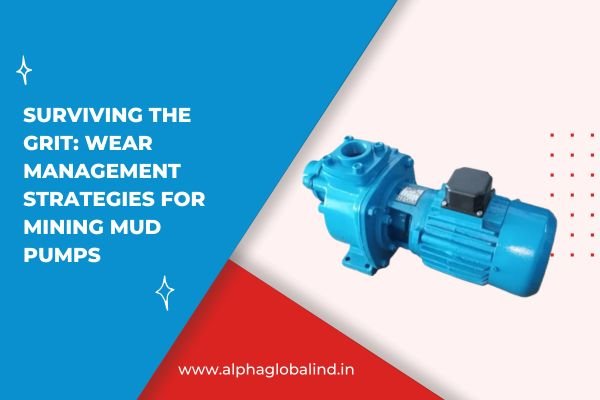
To keep a mining site dry and operational, you need more than just raw horsepower; you need a system designed to fight abrasion. Here is an engineering breakdown of how to manage fluid velocity and component metallurgy to maximize the life of your heavy-duty mud pump.
1. The Critical Balance of Pipeline Velocity
The Danger of Settling Velocity (Too Slow)
Heavy mineral solids have a natural tendency to settle out of suspension due to gravity. The minimum speed required to keep these particles moving forward without dropping to the bottom of the pipe is known as the Critical Settling Velocity. If your pump or piping configuration allows the fluid velocity to drop below this threshold, solids will accumulate, causing pipe friction to skyrocket, choking the flow, and eventually blocking the line entirely.
The Danger of Accelerated Erosion (Too Fast)
To prevent settling, it is tempting to run the pump at maximum speed. However, internal pump wear is directly proportional to the cube of the fluid velocity (V3). This means doubling your fluid speed increases the internal erosion rate by a factor of eight. High velocities cause the sharp rock fragments to slam into the impeller vanes and casing walls with destructive kinetic energy.
2. Structural Metallurgy: Choosing Between Hard Metal and Rubber
High-Chrome Alloys (Hard Metals)
Natural Rubber Liners
3. Protecting the Mechanical Seal: The Expeller Advantage
In a standard liquid pump, the mechanical seal is lubricated by the fluid being pumped. In a mining environment, letting muddy, gritty water enter the seal chamber will instantly scratch the seal faces, leading to catastrophic leaks.
To prevent this, high-performance mining mud pumps utilize a dynamic expeller seal (or back-vanes on the impeller).
As the pump shaft spins, the expeller acts like a secondary impeller, generating centrifugal force that throws the heavy solids away from the shaft entry point and back into the main pump casing. This creates a clean, low-pressure zone around the stuffing box, dramatically extending seal life without requiring continuous external clean-water flushing.
4. Mining Fluid Operational Checklist
Before specifying an excavation or tailing pump with your industrial pump supplier, verify these four environmental metrics:
| Slurry Metric | Operational Impact | Recommended Engineering Choice |
| Coarse, Large Solids (>5mm) | High impact wear on internals | High-Chrome Alloy (27% Cr ) Metallurgy |
| Fine, Gritty Sand (<2mm) | Micro-sliding abrasion | Natural Rubber or Polyurethane Liners |
| High Specific Gravity (> 1.4) | Requires massive torque to prevent settling | Low-RPM, Large Diameter Impeller Design |
| Acidic Mining Runoff (Low pH) | Combined corrosion and abrasion | Duplex Stainless Steel or Specialist Alloys |
Conclusion: Engineering for Total Cost of Ownership
In deep excavation and mining, the true cost of a pump is never its purchase price—it is the cost of the downtime when it fails mid-shift. By accurately calculating your pipeline’s critical settling velocity and matching your internal metallurgy to the exact particle size of your tailings, you prevent premature wear and keep your site running smoothly.
As an established heavy-duty mud pump manufacturer and exporter from Ahmedabad, Alpha Global custom-builds rugged solids-handling and sludge pumping configurations designed to endure the most punishing mining and infrastructure projects worldwide.