In the industrial manufacturing clusters of Gujarat—such as the chemical synthesis plants in Vatva, Naroda, and Ankleshwar—handling aggressive acids, alkalis, and electroplating solutions is an everyday reality. For process engineers, the continuous challenge is managing chemical corrosion.
When a pump handles highly reactive media, using the wrong material can lead to catastrophic consequences. Traditional metals like cast iron or basic stainless steel grades (like SS-304) react with acids, leading to rapid localized pitting, seal weeping, and fluid contamination. While exotic alloys like Hastelloy or Titanium resist this damage, their extreme material costs can strain a plant’s procurement budget.
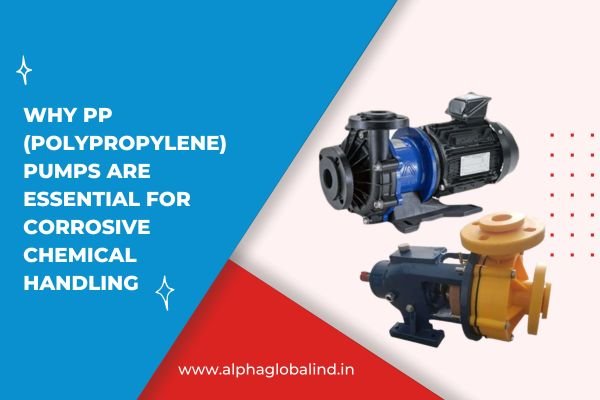
This is why molded Polypropylene (PP) pumps have become an essential standard for non-metallic chemical fluid transfer. They deliver an exceptional balance of absolute corrosion resistance and cost efficiency.
The Materials Science: Why Polypropylene Resists Corrosion
Unlike metals, which corrode through electrochemical oxidation (rusting, galvanic reaction, or electron loss), Polypropylene is a thermoplastic polymer. It features a high-molecular-weight, semi-crystalline hydrocarbon structure : (-CH2-CH(CH3)-)n
Because the polymer backbone consists entirely of stable carbon-to-carbon and carbon-to-hydrogen bonds, it is completely immune to the chemical mechanisms that destroy metals.
[Molded PP vs. Metallic Pump Interior]

Corrosive Acid Flow              Corrosive Acid Flow
=====================            =====================
>>>> [ Smooth PP ] >>>>          >>>> [ Metal Wall ] >>>>
=====================            =====================
(Zero Ion Exchange)              (Pitting & Rust Flakes)
No Material Erosion              Wall Thins / Pump Fails
When aggressive acids pass through a solid, injection-molded PP pump volute casing and impeller, there is zero ion exchange. The material does not dissolve, peel, or leach into the process liquid, ensuring both the longevity of the pump and the purity of the chemical compound.
Chemical Compatibility Highlights
Polypropylene provides an incredibly broad chemical resistance envelope, making it ideal for the chemical distribution and surface treatment sectors:
- Mineral Acids: Excellent resistance to Hydrochloric Acid (all concentrations), Diluted Sulfuric Acid (up to 70%), Phosphoric Acid, and Hydrofluoric Acid.
- Alkaline Solutions: Complete stability when handling Sodium Hydroxide (caustic soda), Potassium Hydroxide, and ammonia-based fluids.
- Plating Bath Reagents: Highly resilient against zinc, nickel, and acid-copper electroplating solutions that rapidly strip metal equipment.
Engineering Constraint: While PP excels with inorganic acids and bases, it should generally be avoided for highly concentrated oxidizing agents (like 98% fuming nitric acid) or strong halogenated solvents (like chloroform and benzene), which can swell or soften the plastic structure. For those extreme applications, fluoropolymers like PVDF are required.
Mechanical Engineering Benefits of Injection-Molded PP Pumps
Process engineers across Ahmedabad specify solid-molded PP centrifugal pumps over metal or lined pumps for several key mechanical reasons:
1. Zero Risk of Liner Delamination
Some plants use steel pumps lined with a thin plastic sleeve. Over time, the thermal cycling or vacuum pressures can cause the inner lining to pinhole, crack, or peel away from the steel backplate (delaminate). This exposes the raw metal shell to immediate destruction. Solid-molded PP pumps eliminate this risk completely because the entire casing wall is solid, thick, chemical-resistant polymer.
2. Hydraulic Smoothness and Low Friction Losses
The internal surface finish of a molded plastic pump volute is significantly smoother than a cast metal surface. This ultra-low surface roughness reduces friction and turbulence losses as the fluid moves through the pump. This high hydraulic efficiency allows the system to deliver optimal flow rates with lower power consumption.
3. Lightweight, Modular Footprint
PP pumps weigh a fraction of their cast-iron or stainless steel counterparts. This makes installation, bench maintenance, and relocation within the plant environment much simpler, reducing the physical strain on your technical team.
Technical Specification Matrix for PP Pump Operation
| Operational Variable | Recommended Engineering Limit | Impact of Exceeding Limit |
| Temperature Range | 0°C to 80°C | Excess heat softens the polymer; freezing causes embrittlement. |
| Solid Particles Size | Prefer clean fluids; limit solids to under 1-2mm | Large, heavy abrasive chunks can scrape the internal casing. |
| Shaft Protection | High-purity Ceramic or Teflon-sleeved shafts | Prevents the metal drive shaft from contacting the process fluid. |
Conclusion: Smart Material Selection Cuts Downtime
In modern chemical processing, choosing the right material is just as important as choosing the right pump size. Molded Polypropylene pumps provide an economical, rust-proof, and hydraulically efficient solution that eliminates the risk of unexpected breakdown caused by chemical attack.
If your processing facility requires customized chemical transfer skids, glandless magnetic-drive PP pumps to eliminate seal leaks, or a complete chemical compatibility assessment for your piping setup, Alpha Global’s engineering specialists in Ahmedabad are ready to configure a durable, low-maintenance solution.