In the industrial landscape of Ahmedabad—from our bustling ceramic hubs to chemical processing zones—one of the most expensive headaches for plant managers is abrasive slurry.
Whether it is lime milk, mining tailings, or chemical waste with suspended solids, slurry acts like sandpaper. It eats through impellers, destroys mechanical seals, and causes unscheduled downtime that can cost lakhs in lost production.
If you are currently replacing pump parts every few weeks, you don’t have a maintenance problem; you have a specification problem. In this guide, we explore why traditional pumps fail and why the Peristaltic (Hose) Pump is the ultimate solution for “unpumpable” fluids.
1. Why Traditional Pumps Fail in Slurry Applications
Most factories start by using Centrifugal pumps because of their lower initial cost. However, when dealing with abrasive media, two things happen:
The Sandpaper Effect (Erosion)
In a centrifugal pump, the fluid moves at high velocity to create pressure. If that fluid contains grit or solids, it acts as an abrasive jet. The impeller and the casing are slowly “machined” away by the fluid itself, leading to a massive drop in efficiency.
Mechanical Seal Destruction
Mechanical seals require a clean environment to function. Slurry particles often find their way into the seal faces, causing scratches, heat buildup, and eventually, a total leak. Once the seal goes, the pump stops.
2. The Peristaltic Solution: A Different Approach to Physics
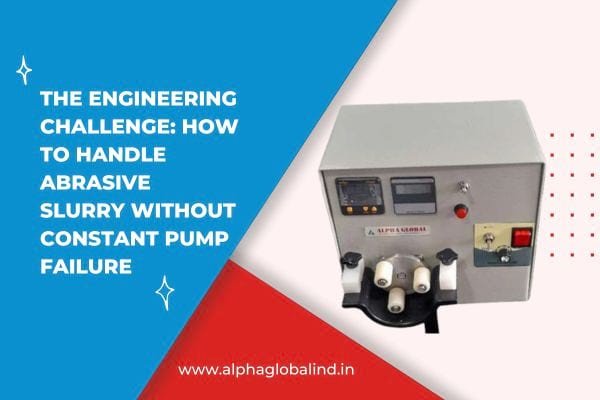
A Peristaltic Pump (often called a Hose Pump) operates on the principle of peristalsis—the same way the human body moves food through the digestive tract. A reinforced rubber hose is squeezed by rollers or shoes, pushing the fluid forward.
Why this is “Slurry-Proof”:
- No Contact with Moving Parts: The slurry only touches the inside of the hose. It never touches the rollers, the shaft, or the casing.
- No Seals, No Valves: Since there are no mechanical seals or check valves to clog, the primary point of failure in traditional pumps is completely eliminated.
- Gentle Handling: The fluid is moved at low speeds. There is no high-velocity turbulence to cause internal erosion.
3. Comparing Performance: Peristaltic vs. Other Technologies
| Feature | Centrifugal Pump | Progressive Cavity | Peristaltic (Hose) Pump |
|---|---|---|---|
| Solids Handling | Poor (Erosion) | Moderate (Stator Wear) | Excellent |
| Dry Run | Failure in Minutes | Failure in Seconds | Indefinite (No Damage) |
| Suction Lift | Limited | Good | Up to 9.5 Meters |
| Maintenance | High (Seals/Impellers) | High (Stators/Rotors) | Low (Hose Change Only) |
4. Operational Savings for Ahmedabad’s Industrial Units
In a typical chemical or ETP (Effluent Treatment Plant) setup in Gujarat, the Total Cost of Ownership (TCO) is what matters most.
While a Peristaltic pump might have a higher upfront cost than a basic monoblock pump, the savings in spares and labor are massive. To maintain a peristaltic pump, you generally only need to replace the hose. This can be done in under an hour without removing the pump from the piping system.
Compare this to a Progressive Cavity pump, where replacing a rotor and stator requires complete disassembly and expensive parts.
5. Key Considerations for Selecting a Peristaltic Hose
Not all hoses are created equal. Depending on your slurry, the material of the hose is critical:
- Natural Rubber (NR): Excellent for highly abrasive slurries and diluted acids.
- EPDM: Best for high temperatures and strong chemicals.
- NBR (Buna-N): The go-to choice for oily or greasy sludges.
At Alpha Global, we assist our clients in Ahmedabad and across India in matching the specific gravity and chemical composition of their slurry to the correct hose grade to ensure maximum lifespan.
6. Real-World Application: Ceramic and Mining
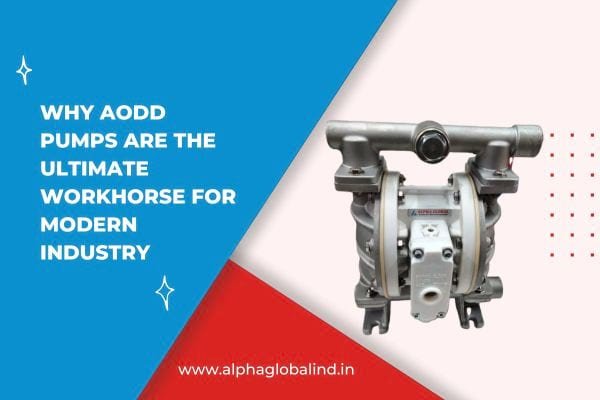
In the ceramic industry of Morbi and Ahmedabad, “ceramic slip” is a notoriously difficult slurry. It is heavy and highly abrasive. We have seen plants switch from air-diaphragm pumps (which require expensive compressed air) to Peristaltic pumps, resulting in a 40% reduction in energy costs and a 60% reduction in maintenance frequency.
Conclusion: Stop Repairing, Start Optimizing
If your current pumping system is the “weak link” in your production line, it’s time to look beyond traditional designs. The ability to handle high-density solids, run dry without damage, and offer total containment makes the Peristaltic pump an unbeatable choice for tough slurries.
As a leading industrial pump exporter and manufacturer in Ahmedabad, Alpha Global is committed to engineering pumps that don’t just work—they last.