In modern chemical manufacturing, water treatment plants, and surface finishing industries, precision is everything. Dosing chemical reagents, flocculants, and pH-adjusting acids requires a volumetric accuracy that remains steady regardless of changing system pressures or fluid dynamics.
While plunger or diaphragm metering pumps are traditionally used for dosing, they frequently run into operational bottlenecks. Chemicals that off-gas (like sodium hypochlorite) cause vapor locking in valve heads, while viscous polymers choke up internal check balls.
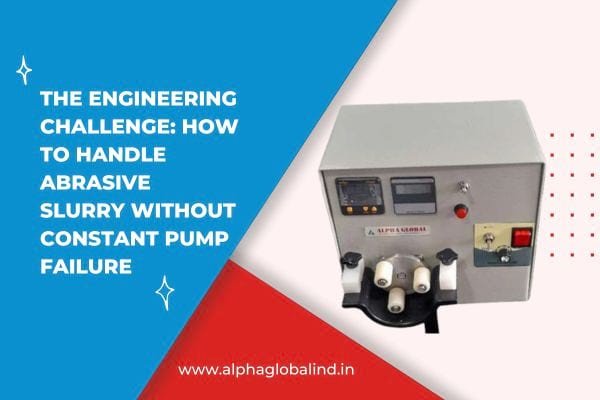
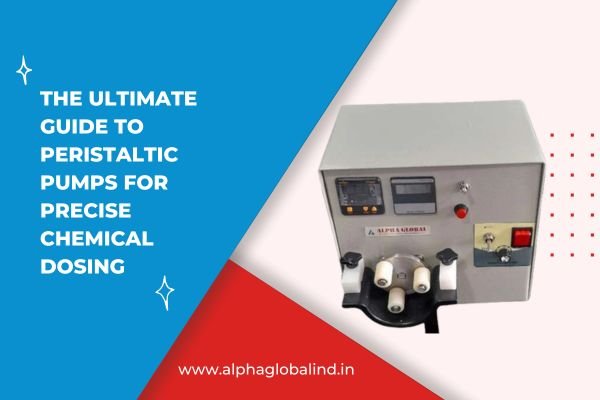
This is where the industrial peristaltic pump (or hose pump) has emerged as a superior engineering alternative. By utilizing a positive displacement design driven by alternating compression and relaxation of a heavy-duty elastomer hose, it eliminates the components that cause traditional pumps to fail.
The Mechanics of Peristaltic Volumetric Precision
At its core, a peristaltic pump operates on a principle known as peristalsis, mimicking the natural muscular contractions of a biological system. Two or more rollers or shoes rotate on a central rotor, completely compressing an internal elastomer tube or reinforced hose against a rigid track.
[Peristaltic Pump Fluid Action]

      Suction Side              Discharge Side
     (Vacuum Pull)             (Positive Displacement)
  =================== (   ) ===================
  Fluid Trapped ----> [ Shoe ] ----> Fluid Pushed
  =================== (   ) ===================
                         ^
                    Rotational Motion
As the rotor turns, the trapped fluid pocket inside the hose is forced smoothly toward the discharge port. When the shoe or roller releases the compression, the natural restitution (rebound) of the hose creates a strong vacuum that draws the next volume of fluid into the pump.
Because the fluid is completely contained within the hose, there is zero internal slippage. The displacement is perfectly proportional to the rotational speed, providing a linear, repeatable accuracy that can easily achieve variance limits below ±1%.
Overcoming the Flaws of Valve-Based Metering Pumps
Engineers across industrial processing zones—such as the massive industrial estates in Vatva, Naroda, and Odhav—frequently switch to peristaltic systems to overcome three specific challenges:
- Elimination of Vapor Lock: Chemicals like sodium hypochlorite or hydrogen peroxide naturally release gases when static. In a standard dosing pump, these gas bubbles get trapped in the valve head, compressing and expanding without letting the check valves cycle. A peristaltic pump pushes gas pockets out as easily as liquids, entirely preventing vapor locking.
- True Seal-less Architecture: Peristaltic pumps have no mechanical seals, packing glands, or O-rings in contact with the chemical. The pump hose serves as the solitary wet part. This eliminates chemical weeping, crystallization damage, and hazardous environmental leaks.
- Handling High-Solids and Abrasive Reagents: Lime slurries and activated carbon solutions are highly abrasive and quickly erode the ball seats of traditional metering systems. Peristaltic pumps route these solids through the smooth hose chamber without internal obstructions, mitigating erosion.
Elastomer Engineering: The Key to Hose Longevity
The single most critical variable in any chemical dosing peristaltic installation is hose selection. Because the hose undergoes constant cyclic compression and chemical contact, matching the elastomer to your specific fluid is paramount to prevent premature rupture.
| Elastomer Compound | Ideal Chemical Compatibility | Key Engineering Properties |
| Natural Rubber (NR) | Water treatment chemicals, diluted acids, abrasive lime slurries | Exceptional mechanical flex-fatigue resistance and rebound memory. |
| EPDM | Concentrated inorganic acids, alkalis, alcohols, ozone | High chemical resistance to oxidizers and harsh polar solvents. |
| NBR (Buna-N) | Oils, grease, hydrocarbons, petroleum-based polymers | High grease resistance; ideal for industrial wastewater oil-skimming. |
| Hypalon® (CSM) | Highly concentrated acids, sodium hypochlorite, strong bases | Maximum chemical oxidation resistance; excellent chemical stability. |
Optimizing Your Dosing System Configuration
To maintain precise accuracy and maximize hose life in your plant, ensure your installation follows these engineering best practices:
- Manage Discharge Back-Pressure : While peristaltic pumps can easily handle high pressures, running them unnecessarily close to their structural threshold accelerates hose fatigue. Install a pressure relief valve on the discharge side to safeguard the line against sudden blockages.
- Design for Low Suction Lift : Even though peristaltic pumps create a powerful vacuum capable of pulling fluid from deep tanks, keeping the suction lines short and straight reduces cavitation forces, ensuring consistent volumetric filling of the fluid pockets.
- Calibrate for Speed vs. Hose Wear : Volumetric output can be increased by running a smaller pump at high RPM or a larger pump at low RPM. For continuous 24/7 chemical dosing, always specify a larger pump running at a lower rotational speed to significantly extend hose operating life.
Conclusion: Engineering Precision for Critical Processes
Peristaltic pumps provide a repeatable, continuous dosing profile that protects against chemical leaks, vapor locks, and abrasive erosion. By confining the liquid entirely to a high-performance elastomer hose, you simplify your maintenance down to a single consumable part while securing the tight volumetric control essential for modern industrial automation.
If your plant requires customized dosing skids, high-pressure reinforced hose pumps, or chemical compatibility verification for an upcoming expansion project, Alpha Global’s technical team in Ahmedabad is fully equipped to evaluate and specify your configuration.